
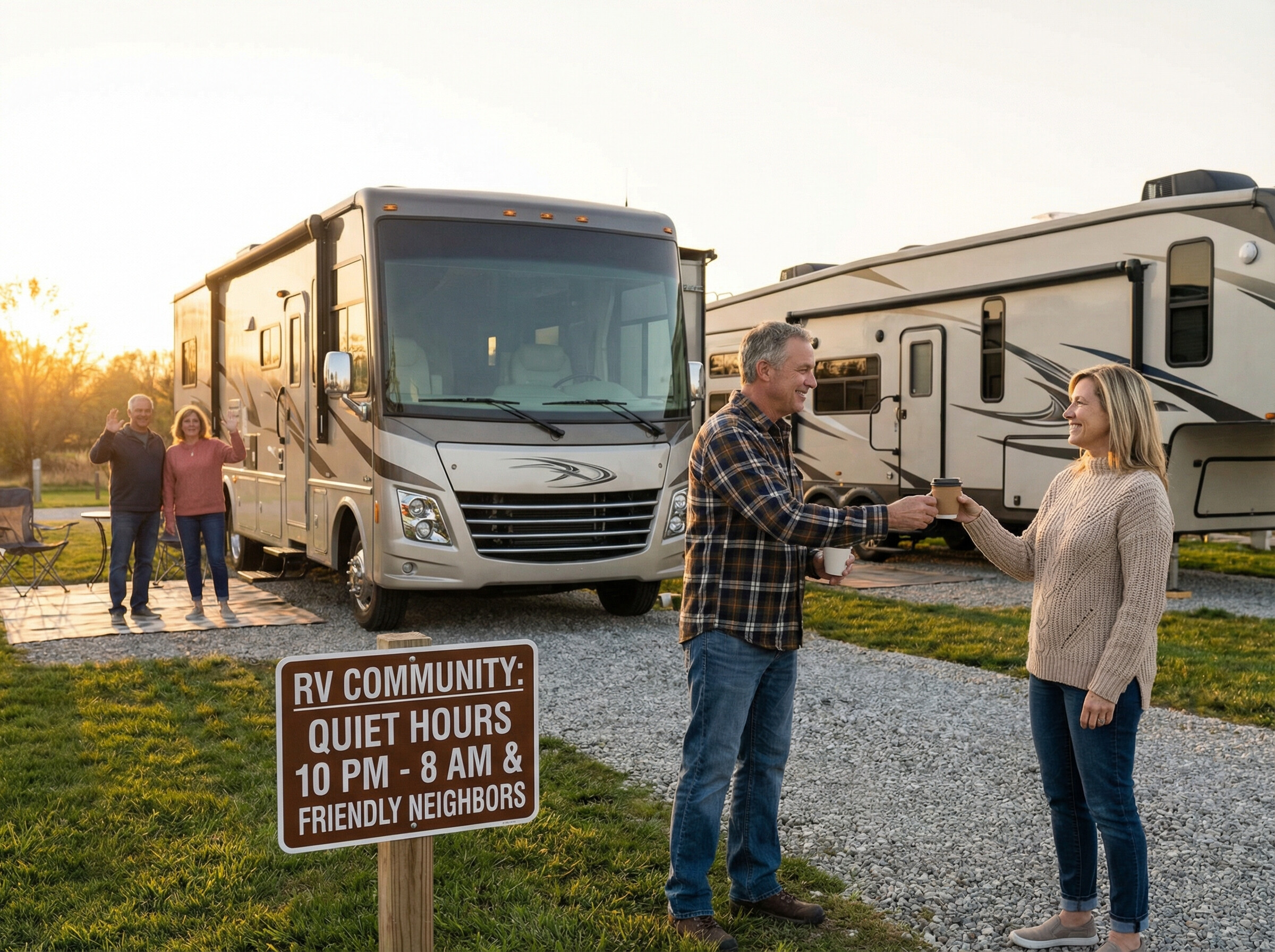
Living in an RV park or campground means sharing your backyard, driveway, and sometimes even your living room wall with complete strangers, and honestly, that’s part of the fun. RV life is about adventure, but it’s also about community, whether you’re full-timing or just escaping for the weekend. Being a good RV neighbor isn’t just polite; it keeps the experience positive for everyone around you, including yourself. Here are the practical ways etiquette makes a real difference when RVs are parked close together.
Table of Contents
- Why RV Neighbor Etiquette Matters
- Respecting Space and Boundaries
- Noise Awareness (Day and Night)
- Thin RV Walls and “Intimate” Time
- Campground Traffic Courtesy
- Pet Etiquette on the Road
- Fire, Grill, and Outdoor Setup Considerations
- Managing Lights and Visual Impact
- Courtesy in Shared Spaces
- Handling Issues Like an Adult
- Being the Neighbor You’d Want Next Door
- Frequently Asked Questions
- RV Life Is a Shared Experience
Why RV Neighbor Etiquette Matters
RV parks and campgrounds stack people a lot tighter than your average suburban neighborhood. Instead of solid fences, you have patio mats and maybe a hedge, and any small behavior, good or bad, gets noticed pretty quickly. Smells, sounds, pets, and even how you park affect your fellow campers more than you might think.
RVers come from every walk of life: retirees with a lifetime of travel stories, families herding energetic kids, solo nomads working from the road, and couples looking for some peace and quiet. All these folks want comfort, safety, and just enough privacy to relax. Etiquette isn’t about following a bunch of stiff rules; it’s about making sure everybody gets the good vibes they’re looking for out of RV life.
Respecting Space and Boundaries
One of the first things I learned in my own RV adventures is how important those invisible lines are between sites. Slideouts, awnings, and patio furniture all create a “bubble” that most folks like to keep to themselves. Sometimes campgrounds mark spots clearly, but a lot of times, it’s just up to your own judgment.
Walking between RVs may feel quicker than taking the road, but it’s basically the RV world version of cutting through someone’s backyard. Even if the space looks unused, that little trail can kill someone’s privacy.
When parking, set up so your stuff like grills, chairs, and mats stay comfortably on your side. Give everyone room to open doors and kick back without bumping elbows. I’ve seen so many simple misunderstandings avoided just by paying attention to those boundaries.
Noise Awareness (Day and Night)
RVs have surprisingly thin walls and windows that let a lot in and out. Campground quiet hours are there for a reason. If you’ve ever tried to fall asleep next to a generator humming away past midnight, you know it sticks with you. Even in places without written rules, it’s a good idea to turn off loud stuff, generators, music, and outdoor TVs during typical sleeping hours.
Daytime is a bit more relaxed, but yelling, barking dogs, or cranking up big speakers can really mess with your neighbors’ attempts to nap, work remotely, or just enjoy nature. Late arrivals and early departures can’t always be helped, but keeping the noise down goes a long way.
Thin RV Walls and “Intimate” Time
RV walls might look solid, but they’re pretty much tissue paper compared to a real house. Regular conversations, laughter, or even certain TV channels can carry straight through to your neighbor’s space. Windows, roof vents, and open doors make this even trickier.
I’ve heard some genuinely awkward stories about couples forgetting just how thin those walls are, especially on cozy weekend getaways. Closing the windows and paying attention to indoor volume isn’t about being paranoid; it just avoids the kind of moments everybody would rather avoid discussing later.
Campground Traffic Courtesy
Walking around a campground at dusk, I notice the habits that really make a place feel safe and relaxed. Speed limits in these areas are usually low for good reason: kids, pets, and people on bikes pop out all the time. Rolling slow is just safer for everyone, and it stirs up less dust on gravel roads.
If you roll in after dark, cut your headlights to the lowest setting possible and keep backup alarms or air brakes quiet. I do my best to line up all the parking details before sunset, but if you can’t help a late arrival, try to be as stealthy as you can. Parking extra vehicles, a towed car, or toys like four-wheelers should never block roads or spill into other campsite space.
Pet Etiquette on the Road
Dogs and cats are part of the family, but campgrounds have different vibes about pets. Leashing is pretty standard everywhere, just as much for your pet’s safety as anyone else’s. Poop bags aren’t optional, and cleaning up after your pet the first time signals to everyone that you “get it.”
Some pets bark more than others. If yours is a talker, look for a shady walk or let them hang out inside during long absences. Not all neighbors are comfortable with animals. Maybe they have allergies, bad memories, or just want quiet. Most campgrounds have pet free zones; play fair, and respect those boundaries. It builds a lot of goodwill.
Fire, Grill, and Outdoor Setup Considerations
Flames and food smells add to the camping vibe, but a little attention can keep things pleasant all around. Place fire pits and grills where the smoke drifts away from neighboring sites. Smoke from a smoldering fire or sizzling bacon early in the morning isn’t a crowd-pleaser when it’s blowing right into someone else’s window. If you’re an occasional cigar smoker it’s always tempting on a beautiful day to go outside and light up. Just be aware that when the weather is good, other campers will have open windows. The same goes for cigarettes.
When setting up your patio, corral your gear, lights, rugs, bikes, so it doesn’t sprawl out into walking paths or nextdoor lots. Double check campground rules for fire bans and use spark screens or covers if you’re in an area with wildfire risk.
Managing Lights and Visual Impact
LED light strips and motion lights can make a site look festive, but after dark, even a little extra light can spill into neighboring RVs. If your neighbor is trying to stargaze or just sleep well, bright porch bulbs and string lights might be a problem. Turn off decorative lights before hitting the sack, and go for softer downward facing bulbs if you want a little glow for safety.
Privacy screens, awnings, and shade tents help create cozy spaces, while at the same time blocking bright lights. Remember that your nighttime lighting choices might stick out more than you realize to those camping nearby.
Courtesy in Shared Spaces
Shared showers, laundry rooms, and dump stations get a ton of use in busy parks. Leave these places as clean (or cleaner) than you found them. Even if you’re in a hurry, avoid hogging machines or shower stalls, and wipe down surfaces for the next person.
If you see someone struggling, especially a new RVer working out hose hookups or backing in for the first time, offer friendly advice if they look interested. But don’t hover or take over unless they ask; you’d be surprised how far a smile and a little space can go.
Handling Issues Like an Adult
Disagreements or annoyances will happen eventually. If your neighbor’s dog barks all day or someone’s latenight party wakes up half the campground, a simple, respectful chat can fix things nearly every time. Approaching people calmly, assuming they aren’t aware, usually works much better than stewing in frustration.
If that doesn’t help or things start to get heated, camp hosts and park staff are there to help smooth things out. Major rules, such as quiet hours, are there for everyone’s benefit, and sometimes an official reminder from staff is needed to get the message across.
Being the Neighbor You’d Want Next Door
Small acts of thoughtfulness make campground life feel a lot less anonymous. If you notice someone needs help backing in or looks lost, offer a hand. Sharing tips without being pushy, keeping your site tidy, and looking out for others are easy ways to be the neighbor you would want yourself.
Most people like friendly greetings or a quick wave, but don’t press for long chats if someone looks busy or keeps to themselves. A little empathy and respect for others’ styles make the whole park feel welcoming and easygoing.
Frequently Asked Questions
1. How quiet should I really be in an RV park?
Quieter than you’d think, especially at night. RV walls are thin, and sound travels easily through windows and vents. During quiet hours, that means shutting down generators, turning off outdoor music and TVs, and keeping indoor noise at a level you wouldn’t mind hearing from the next site over.
2. Is it rude to walk between other RV sites if there’s no fence?
Yes, most of the time it is. Even if the space looks open, walking between RVs feels like cutting through someone’s yard. Sticking to roads and designated paths is a simple way to respect privacy and avoid awkward moments.
3. What’s the best way to handle a neighbor who’s being disruptive?
Start with a calm, friendly conversation if it feels safe to do so. Most people aren’t trying to be inconsiderate and may not realize there’s an issue. If that doesn’t work, campground hosts or staff are there to step in without turning it into a personal conflict.
4. How can I be a good RV neighbor without feeling awkward or intrusive?
Keep your site tidy, mind your noise, control pets, and offer help only when it looks welcome. A wave, a smile, or a short hello goes a long way. Good RV neighbors strike a balance between friendliness and giving people space.
If you’ve ever had an amazing RV neighbor or a not-so-great one, you already know how much etiquette shapes the campground experience. Share this post with a fellow RVer, save it for your next trip, or pass it along to someone new to RV life. A little awareness goes a long way, and when we all do our part, every campground feels more like a place you actually want to stay.
RV Life Is a Shared Experience
Traveling by RV means embracing open spaces, ever changing views, and a healthy mix of privacy and community. Everyone gets a turn at being the new kid or the old hand who knows all the tricks. The best campgrounds I’ve enjoyed are places where people strike a balance, enjoying their personal freedom while giving others space to do the same.
It only takes a bit of care, a little patience, and some neighborly energy to make life nicer for everyone on the road. Good etiquette isn’t fussy or old-fashioned; it’s the best way to create enjoyable trips, lasting friendships, and that special neighborly spirit that makes RV life unforgettable.
About the Author
Jim has 3.5 years of experience living and traveling full-time in an RV. From “moochdocking” with family and friends to navigating the financial intricacies of RV life, he shares practical advice rooted in firsthand experience. His goal is to help fellow adventurers embrace the RV lifestyle with confidence and ease.