
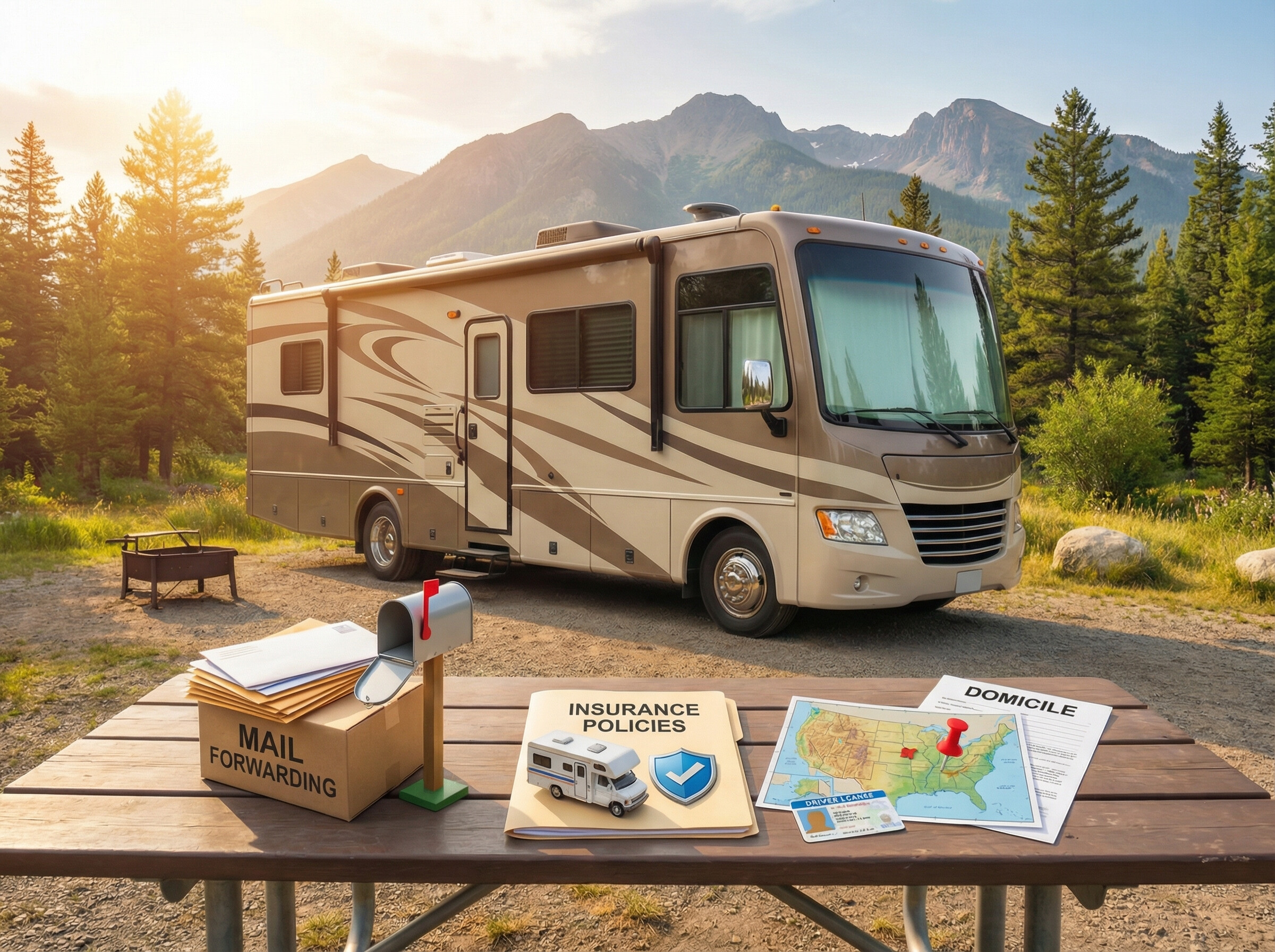
Living on the road full time gives you a kind of freedom most people only daydream about, but it also introduces a few odd realities. One of the first surprises is discovering you still need a legal home base even when your house has wheels. Things like mail, insurance, taxes, banking, and even voting are all tied to this decision. And heading into 2026, the rules haven’t gotten any simpler.
The good news is that once you understand how residency and domicile work for RVers, the whole process feels a lot less intimidating. This guide walks through everything you need to know so you can choose a state, set up your address, and travel with confidence instead of confusion.
Table of Contents
- Why Domicile Isn’t Just a Technicality
- Popular States for Full-Time RV Domicile
- How to Set Up Your Domicile the Right Way
- Best Mail Forwarding Services for RVers
- Insurance: Why Domicile Matters More Than You Think
- Keeping Banking and Financing Simple
- Taxes, Voting, and Keeping Everything Organized
- Common Mistakes I’ve Seen (and How to Dodge Them)
- When to Mix It Up
- FAQs for First-Time Full-Time RVers
- Wrapping Up
Why Domicile Isn’t Just a Technicality
When you start living exclusively in your RV, finding a place that serves as your legal anchor is super important. Domicile is the state and address you claim as your true home, even if you rarely spend time there physically. This is different from where you park your rig for a season or summer gig. Your legal domicile impacts everything: how the government taxes you, what insurance options you can get, where you vote, and how you receive your mail. Getting it set up properly keeps life smooth. Setting it up the right way at the start makes things easier later on, especially for driver’s licenses, financial accounts, and healthcare access.
10 Essential Questions To Ask Before Living Full-Time In An RV
Popular States for Full-Time RV Domicile
Most RVers end up picking one of three states because of the perks they offer. Here’s a quick breakdown:
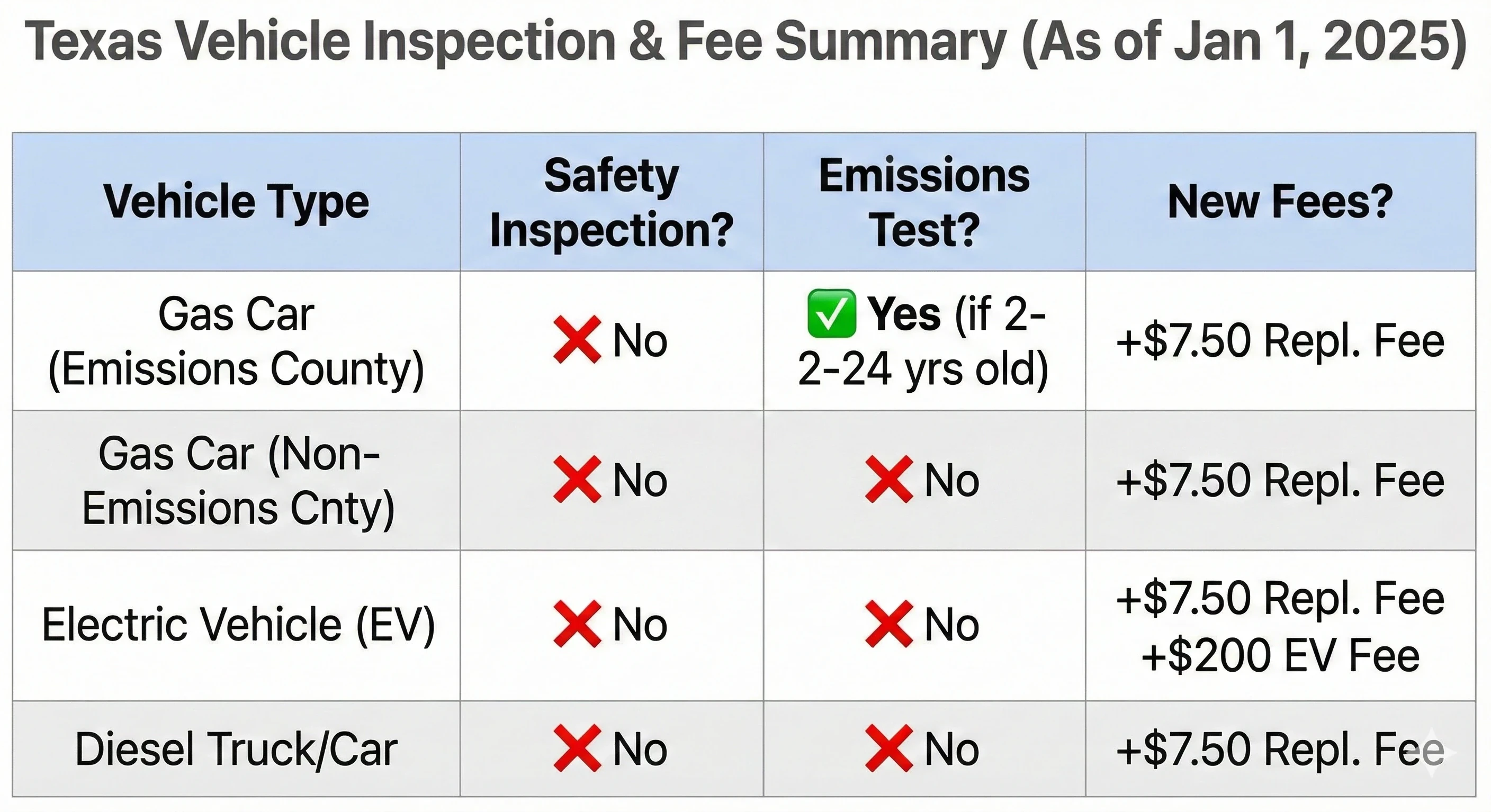
- Texas: There’s no state income tax, and it’s one of the most RVerfriendly places. Insurance rates are middle of the road. As of January 1, 2025 vehicle and non-commercial RVs are not required to have inspections. (See chart. below)
- Florida: No state income tax here. People say great things about the strong health insurance options thanks to the Affordable Care Act (ACA), plus registration is fairly simple and there’s no vehicle inspection requirement.
- South Dakota: It’s super easy to pick South Dakota for domicile. You need to spend just one night in the state, there are low fees, very affordable insurance, and they don’t require annual vehicle inspections. Coverage for health insurance plans is more limited, though.
How to Set Up Your Domicile the Right Way
Transitioning to full-time RV life means updating a bunch of official paperwork. Here’s a checklist that’ll make things go smoother:
- Pick a reliable mail forwarding service in your chosen state. Look for services that provide an actual street address (not just a PO box).
- Update your driver’s license and register your vehicles with your new domicile address.
- Register to vote and update your voter information.
- Notify banks, insurance providers, credit cards, and all other account holders about your new legal address.
- Keep records that back up your intent to stay with your chosen domicile; for example, use local doctors, join local clubs, and keep receipts.
The Realities Of Full-Time RV Living: Pros And Cons
Best Mail Forwarding Services for RVers
Getting your mail delivered while traveling full-time can sound tricky, but mail forwarding services really smooth the way. Here are some top options that many RVers use:
- Escapees Mail Service: Based in Texas and Florida, Escapees is known for reliability and many years of helping RVers.
- America’s Mailbox: The main choice for South Dakota domicile setups, offering physical addresses and flexible plans.
- Traveling Mailbox: Available in several states, with fast scanning and mail forwarding. It’s great if you get plenty of packages.
- iPostal1: Offers lots of real street address locations and advanced online access to scanned mail.
Choose a service with a real address (avoid PO boxes), the ability to scan and forward mail, strong package support, and a track record of reliability. See our post, How To Get Mail When Full Time RVing
Insurance: Why Domicile Matters More Than You Think
Your domicile address doesn’t just affect your auto and RV insurance rates, but also the types of policies you can buy and what they cost. Each state has its own set of rules, so check them out before you make a switch.
- RV and Vehicle Insurance: Companies use your domicile address to set your rates and eligibility. Texas and South Dakota usually have good deals for RVers; Florida’s rates are average but you get more policy options if you want full-time coverage.
- Health Insurance: This is a big deal for many. Florida gets a thumbs up for offering ACA policies with wide networks. Texas can leave you with more regional networks, which is limiting if you’re traveling nationwide. South Dakota’s ACA options are very limited, so many RVers look at healthcare sharing ministries or short-term plans for coverage.
Keeping Banking and Financing Simple
Banks and lenders can be picky about addresses tied to mail services. Some major banks and traditional lenders might flag your address if it points to a commercial mail service. Here are some tips to avoid trouble:
- Use banks and credit unions that are familiar with RV travel and mail forwarding addresses (some even serve full-timers).
- Keep your legal address the same across your accounts: banks, credit cards, retirement funds, and so on.
- Have documentation on hand to support your domicile, like scanned copies of RV registration, domicile paperwork, and your driver’s license, in case you need them.
Taxes, Voting, and Keeping Everything Organized
One of the best things about Texas, Florida, and South Dakota is having no state income tax. This frees up your finances, especially if you have predictable income or retirement funds coming in.
- Voting: Register in your new domicile state. Most RVers use mail-in ballots and work with their mail service for timely delivery.
- Legal Consistency: Everything, including your will and bank accounts, should show the same address and state to avoid confusion or legal hassles about your residency.
Common Mistakes I’ve Seen (and How to Dodge Them)
- Copying another RVer’s choice without checking what’s best for you
- Forgetting to update all your accounts (credit cards, Amazon, banks, etc.) with the new address
- Using a relative’s or friend’s house instead of a legal domicile service, which can get you into messy tax or legal situations
- Not checking health insurance availability before setting up domicile. The plan you want might not be offered in your chosen state.
When to Mix It Up
Sometimes, your first domicile choice doesn’t work out. If insurance costs spike, health networks change, mail service quality drops, or you find yourself sticking to another region most of the year, it might be time to switch. Registration rules and health networks can change quickly, so staying flexible really helps.
FAQs for First-Time Full-Time RVers
Q: Is it hard to set up a legal domicile?
If you pick one of the RVer-friendly states and follow the steps—mail service, licenses, and registration—it’s pretty straightforward. Services like Escapees or America’s Mailbox guide you through the process.
Q: Can I use a friend’s address as my legal domicile?
Technically, you can, but it’s not smart. Legal, insurance, and tax headaches appear fast if your address doesn’t match your lifestyle or your friend moves.
Q: What if I get most of my pay online; do I still need a domicile?
Yes. Even digital nomads need a legal state for taxes, insurance, and banking. Online income doesn’t change state residency requirements.
Wrapping Up
Picking the right domicile can change your full-time RV experience. Think about how often you want to return to your home base, your healthcare needs, insurance options, and how fast you want your mail delivered. The main thing is to research, keep all your official documents together, and enjoy life on the road without stressing about red tape.
About the Author
Jim has 3.5 years of experience living and traveling full-time in an RV. From “moochdocking” with family and friends to navigating the financial intricacies of RV life, he shares practical advice rooted in firsthand experience. His goal is to help fellow adventurers embrace the RV lifestyle with confidence and ease.
There are no affiliate links in this post but feel free to read our affiliate disclosure.