
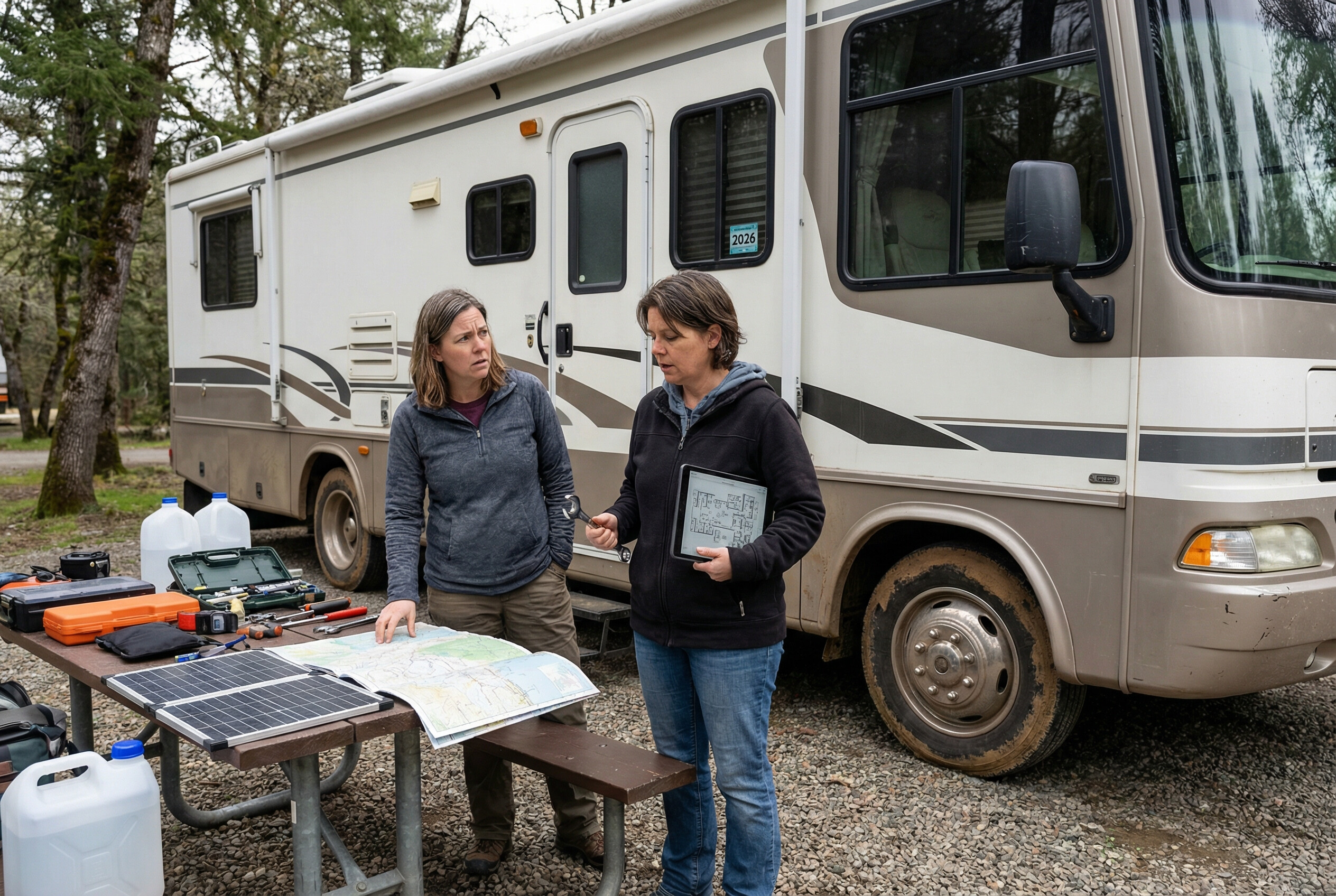
Every year, more people decide that full-time RV living is their next chapter. Sometimes it’s about freedom. Sometimes it’s about cost. Sometimes it’s just a desire to stop maintaining a house they barely enjoy anymore.
Heading into 2026, that interest hasn’t gone away, but the landscape has changed. The RV lifestyle is more crowded, more regulated, and more expensive than many people expect. None of that means you shouldn’t do it. It does mean you need to understand what full-time RV life actually looks like once the excitement wears off.
I’ve lived this lifestyle long enough to know where the friction shows up. This isn’t the polished version. This is the real one.
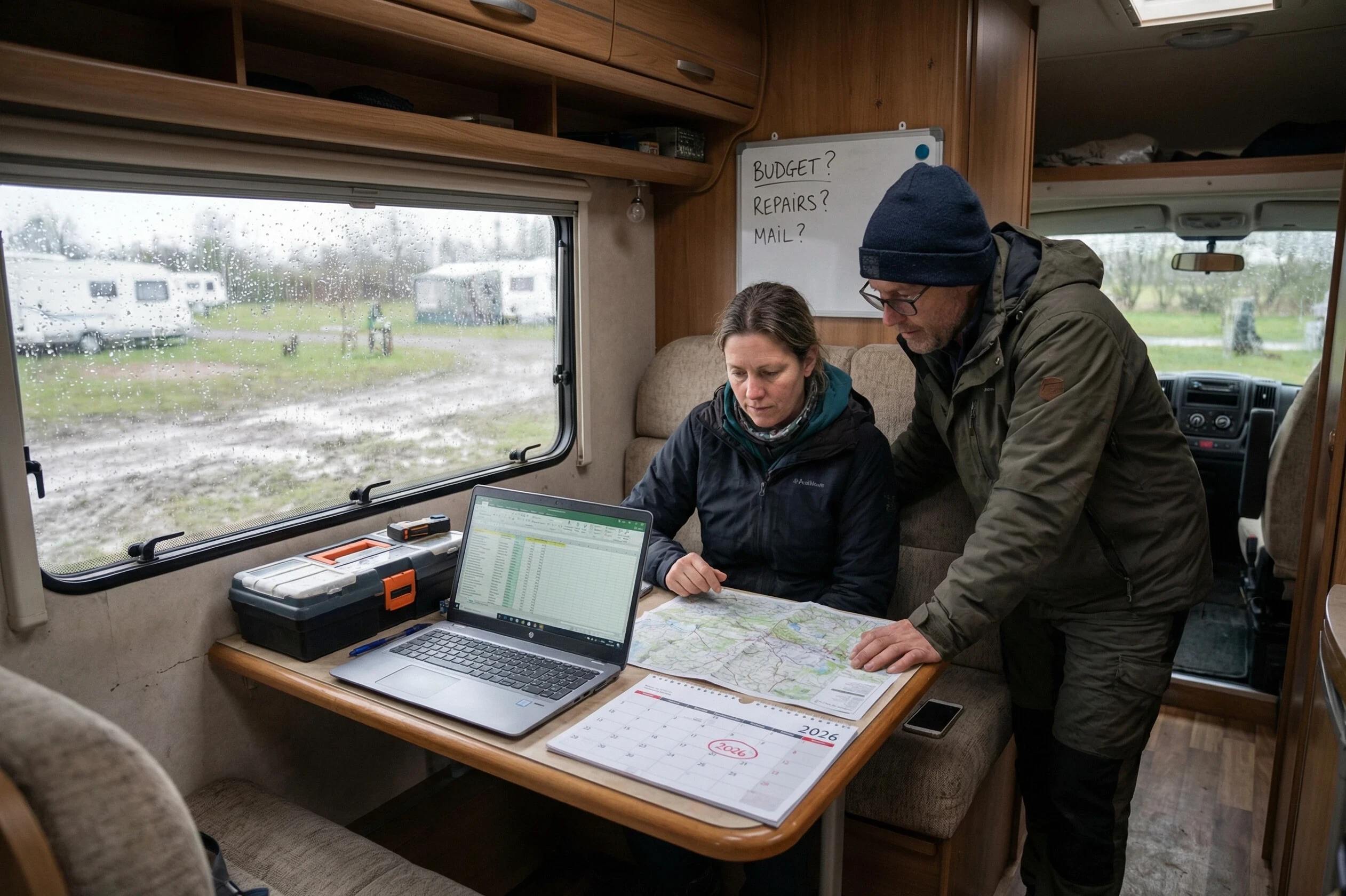
Table of Contents
- The RV You Choose Will Shape Everything
- Downsizing Is Not a One-Time Decision
- Finding a Place to Stay Is Harder Than It Looks
- Budgeting Breaks When Reality Hits
- Internet Is Better, Not Solved
- Maintenance Interrupts Your Life, Not Just Your Schedule
- The Mental Load Is Real
- Paperwork Still Follows You
- Frequently Asked Questions About Going Full-Time in an RV in 2026
- Is full-time RV living still affordable in 2026?
- How far in advance do I need to plan campground stays?
- What’s the biggest mistake new full-time RVers make?
- Can I work remotely while living full-time in an RV?
- Do I need a permanent address if I live full-time in an RV?
The RV You Choose Will Shape Everything
In 2026, the RV market is calmer than it was a few years ago, but it’s still uneven. New rigs are expensive and not immune to build quality issues. Used rigs can be bargains or disasters, sometimes both at once.
What trips people up is underestimating what “full-time” really means for a rig.
This isn’t a weekend camper anymore. It’s your house. When something breaks, you don’t go home. You live with it until it’s fixed. That changes the math.
Common mistakes I see:
- Buying based on floorplan alone
- Trusting dealer inspections without independent verification
- Underestimating how fast small annoyances become daily stressors
If you choose the wrong rig, every other challenge on this list gets harder. Repairs take longer. Storage never works. Weather becomes miserable. There’s no shortcut here. Time spent choosing carefully saves years of frustration.
Downsizing Is Not a One-Time Decision
Downsizing is the part everyone thinks they understand. Almost nobody does.
The reality is that you won’t downsize perfectly the first time. You’ll keep things you don’t need and get rid of things you miss. That’s normal.
What’s not harmless is treating storage as a long-term solution. In 2026, storage costs add up quickly, and many full-timers quietly pay for units they never visit.
A smarter approach is to treat downsizing as a process, not a purge:
- Start earlier than feels necessary
- Live smaller before you commit
- Be honest about what earns its space
If you’re keeping items “just in case,” ask yourself when that case realistically arrives. Storage should support your transition, not become a permanent expense you forget about.
Finding a Place to Stay Is Harder Than It Looks
Campground availability remains one of the biggest stress points for full-time RVers in 2026.
Monthly sites are harder to find, especially in desirable areas. Many parks favor short stays. Age restrictions and RV length limits quietly eliminate options before you even call.
This isn’t just inconvenient. It affects your budget and your mental load.
When availability is tight, you end up:
- Paying more than planned
- Moving more often than you want
- Making decisions under pressure
Flexibility is no longer optional. If your plan depends on staying in one specific region during peak season, you’re setting yourself up for frustration. Full-time RV life works best when you let weather, demand, and availability guide your movement.
Budgeting Breaks When Reality Hits
A lot of full-time RV budgets look great on paper. Fewer of them survive the first year unchanged.
In 2026, costs are less predictable than many expect. Fuel swings. Campground rates creep up. Repairs rarely space themselves out nicely.
What people underestimate isn’t just cost, it’s timing.
Repairs cluster. Travel days multiply. One unexpected issue can ripple through your plans for weeks.
If your budget only works when nothing goes wrong, it doesn’t work. A realistic full-time budget needs slack. Margin is what keeps small problems from becoming lifestyle-ending ones.
Internet Is Better, Not Solved
Connectivity has improved, but it’s still a weak link for many full-time RVers.
Campground Wi-Fi remains unreliable. Cellular coverage varies wildly. Satellite internet helps, but weather, trees, and congestion still matter.
If you work remotely, redundancy isn’t a luxury. It’s required.
That means:
- Multiple connection options
- Ongoing costs
- Occasional troubleshooting during the workday
We used various hotspots during our time on the road. We finally settled on StarLink and a T-Mobile Home hotspot and never were without good internet service.
The biggest mistake is assuming technology has eliminated connectivity problems. It hasn’t. It’s just changed their shape.
Maintenance Interrupts Your Life, Not Just Your Schedule
Maintenance is constant in RV life. That’s not news. What surprises people is how disruptive it can be.
A repair doesn’t just cost money. It costs time. It changes travel plans. It forces reroutes. Sometimes it means living in a shop lot or extending a stay you didn’t plan on.
In 2026, service delays are still common. Parts aren’t always available quickly. Skilled technicians are in demand.
You don’t need to be a mechanic, but you do need basic skills and realistic expectations. The more self-sufficient you are, the less stressful this part becomes.
The Mental Load Is Real
Full-time RV living requires constant decisions. Where to stay next. When to move. How long to linger. What to fix now versus later.
That decision fatigue wears on people more than they expect.
Add distance from family, short-lived campground friendships, and the lack of a true home base, and the mental side of this lifestyle becomes clear.
This doesn’t mean RV life is lonely. It means community takes effort. Routine takes intention. Stability looks different than it did before.
Paperwork Still Follows You
Living on the road doesn’t remove bureaucracy. It just changes how you deal with it.
Domicile, mail forwarding, insurance, banking, and registration all still matter. In 2026, some institutions remain skeptical of nontraditional addresses, and mistakes here can create real problems.
This is one area where cutting corners backfires. Get it right early and revisit it occasionally.
Frequently Asked Questions About Going Full-Time in an RV in 2026
Is full-time RV living still affordable in 2026?
It can be, but it isn’t automatically cheaper than stationary living. Costs depend heavily on how you travel, where you stay, and how often you move. Slow travel, seasonal planning, and avoiding peak-demand areas help control expenses. If your plan assumes constant movement or resort-style parks, affordability disappears fast.
How far in advance do I need to plan campground stays?
More than most people expect. In popular regions or during peak seasons, monthly sites often book three to six months out. Even short stays can require advance planning. Full-time RVers in 2026 need flexibility in location and timing, not just a loose route.
What’s the biggest mistake new full-time RVers make?
Underestimating friction. That includes maintenance delays, campground availability, connectivity issues, and the mental load of constant decisions. People often plan for best-case scenarios instead of building margin for when things don’t go smoothly.
Can I work remotely while living full-time in an RV?
Yes, but only with redundancy. Relying on a single internet option is risky. You’ll need multiple connection methods and the willingness to troubleshoot. Remote work on the road is doable, but it requires planning, equipment, and patience.
Do I need a permanent address if I live full-time in an RV?
Yes. You still need a legal domicile for taxes, insurance, vehicle registration, voting, and banking. Mail forwarding services help, but domicile choice affects more than people realize. This is one of those areas where getting it right early prevents long-term headaches. See our Full-Time RV Residency Guide.
If going full-time in an RV in 2026 is on your radar, the best thing you can do right now is slow down and plan intentionally. This lifestyle rewards preparation and flexibility far more than optimism.
Take time to test the waters. Do a long trip. Track real expenses. Practice living smaller. Learn how campground availability actually works before you commit.
If you want more straight talk about full-time RV living, budgeting, campground strategy, and avoiding expensive mistakes, explore the rest of RV Life Escapes. Everything here is built around helping you travel smarter, with fewer surprises and more confidence on the road.
Freedom feels a lot better when you’re prepared for the tradeoffs that come with it.
Going full-time in an RV in 2026 is absolutely doable. It can be deeply rewarding. But it’s not passive, and it’s not always cheaper or easier.
This lifestyle works best for people who:
- Value flexibility over control
- Can tolerate uncertainty
- Are willing to adapt instead of forcing plans to fit
If you understand the tradeoffs and plan for the friction, full-time RV life can still deliver exactly what draws people to it in the first place. Freedom, simplicity, and a life that moves at your pace, not someone else’s.
About the Author
Jim has 3.5 years of experience living and traveling full-time in an RV. From “moochdocking” with family and friends to navigating the financial intricacies of RV life, he shares practical advice rooted in firsthand experience. His goal is to help fellow adventurers embrace the RV lifestyle with confidence and ease.